
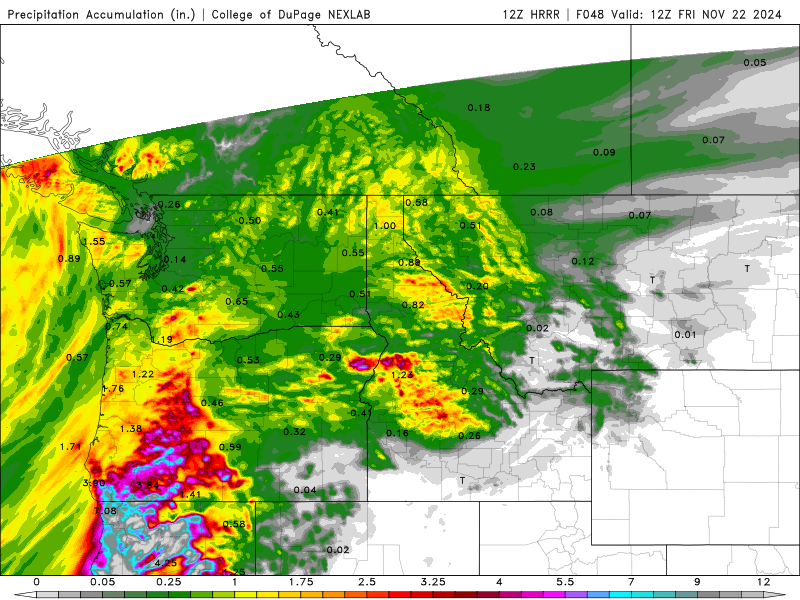
Im sure when you woke up today and heard about the bomb cyclone that was impacting the Pacific NW, you would have thought it was a made up phenomenon. Or if you’re reading this post and thinking what am I talking about let me explain. The Pacific NW has been dealing with heavy rain and winds for the last few days, and in the last 24 hours the system over the area rapidly intensified, causing hurricane force winds along the coast of Oregon and Northern California. According to the NOAA a Bomb Cyclone or Bombogenesis occurs when a mid-latitude cyclone rapidly intensifies, or strengthens over a 24 hour period. This intensification is represented by a drop in millibars, a unit of measure for atmospheric pressure. The intensification required to classify as “Bombogenesis” varies by latitude, usually between the tropics and polar regions. Bombogenesis can happen when a cold air mass collides with a warm air mass, such as air over warm ocean waters. It is popularly referred to as a Bomb Cyclone. With the millibars or pressure dropping rapidly in this case the low pressure system intensified, producing heavy winds and the heavy precipitation. You normally see this kind of drop in mb’s in the Tropics while a Tropical Storm or Hurricane are intensifying. Along with the bomb cyclone comes with an atmospheric river. The NOAA defines an atmospheric river as “long, concentrated regions in the atmosphere that transport moist air from the tropics to higher latitudes. Essentially the moisture from the Pacific Ocean is being pulled into the Pacific NW and furthering the rain and heavy flooding to the area. In the Sierra’s the precipitation turns to snow due to the higher elevations. The Sierra’s could see a few feet of snow while areas in the Pacific NW and Northern California could see a foot of rain when this system gets out of the area in the next few days.



 Weather Made Fun and Exciting!
Leave a comment